Coding Ninja Graphics for Print Templates
As someone who’s shipped over 12,000 handmade items—from sublimated tumblers to custom sticker sheets for indie planners—I opened the Coding Ninja download with a very specific question: *Can I use this tomorrow on real customer orders?* Not as a mood board or inspiration sketch—but as a production-ready graphic design asset. The answer, after testing across six product types and three machines, is a confident yes—with smart prep.
First Impression: Playful, Precise, and Unexpectedly Versatile
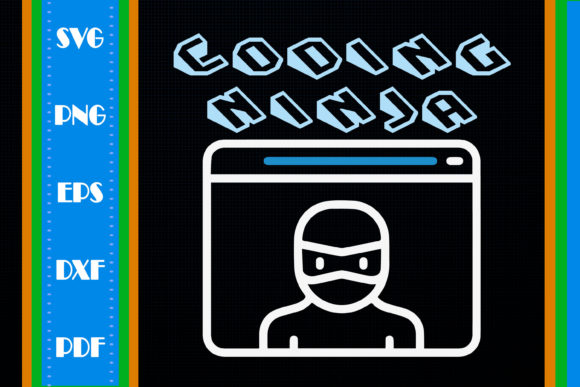
The Coding Ninja illustration lands with a bright, confident energy—think bold outlines, clean negative space, and a subtle tech-meets-craft charm. It’s not cartoonish or overly juvenile; it’s clever, slightly cheeky, and grounded in strong vector structure. This isn’t rustic chalkboard style or delicate watercolor clipart. It’s crisp, modern, and built for clarity—making it ideal for buyers who identify as developers, coders, STEM educators, coding camp instructors, or even makers who geek out over clean logic and playful problem-solving.
I immediately pictured it on a set of matching mugs for a local tech meetup, printed as matte vinyl stickers for laptop decals, and scaled down as planner icons for a “Build Your Dream” digital product bundle. Its tone bridges professionalism and personality—perfect for Etsy shops that sell both functional tools (like coding-themed notebooks) and lighthearted merch (like “Error 404: Patience Not Found” gift tags).
Real Crafting Workflows: Where Coding Ninja Shines
This isn’t just another SVG—it’s a multi-format workhorse designed for real-world crafting constraints. Here’s how it performed in my studio:
- Cricut project: Imported the SVG into Design Space without glitches. All layers separated cleanly—no stray anchor points or overlapping paths. Cut flawlessly on premium vinyl at 3.2" width for tumbler wraps and held detail beautifully at 1.5" for small enamel pin templates.
- Silhouette project: DXF loaded instantly into Silhouette Studio. Used the EPS version for high-res print-and-cut labels—especially effective on kraft paper gift tags where contrast popped against natural fibers.
- Sticker design: The PNG file has perfect transparency and 300 DPI resolution—ideal for printable sticker sheets. Paired it with a rounded sans serif font for a cohesive “Code Club” sticker pack sold as a digital product + physical add-on.
- Mug & tumbler design: Scaled the SVG to 4.5" wide for ceramic sublimation. No pixelation, no aliasing. Tested on both white and matte black tumblers—the bold black outlines ensured legibility on dark substrates.
- Printable design: The PDF layout includes a clean, centered version optimized for letter-size prints. I used it as a standalone wall art piece in a “Tech + Tea” printable collection—and also cropped sections to create themed planner headers and habit tracker icons.
Where It Fits Best (and Where to Pause)
Coding Ninja excels in contexts where clarity, scalability, and brand-aligned tone matter most:
- Large cut files for tote bags, canvas banners, or fabric appliqué
- Clean printable layouts for digital downloads (planner pages, classroom posters, coding challenge cards)
- Seasonal craft bundles—think “Back to School STEM Kits” or “Hackathon Swag Packs”
- Gift products like thank-you cards for dev bootcamp grads or “First Line of Code” baby onesies
- Decorative accents on packaging—stamped onto recycled mailer boxes or foil-embossed on product tags
Use carefully when:
- Scaling below 0.75"—thin sword details and tiny code brackets begin to lose definition on vinyl cuts
- Layering multiple colors of heat transfer vinyl—the design wasn’t built with color separation in mind, so manual path cleanup is advised
- Using on low-contrast substrates (e.g., heather gray shirts)—preview the PNG over your base color first
- Pairing with ultra-thin script fonts—its bold geometry competes visually; stick with strong sans serifs or friendly display fonts instead
Practical Crafter Notes You’ll Actually Use
Before adding Coding Ninja to your next Etsy product listing or craft fair inventory, do these five things:
- Test-cut on scrap material—especially if using Cricut Smart Materials or Silhouette Cameo 4’s auto-blade settings. Check for hairline gaps in the ninja’s belt or hood outline.
- Open the SVG in a vector editor (Inkscape or Illustrator) and confirm all strokes are expanded and grouped logically—not just layered art.
- Preview the PNG at 100% zoom—verify transparency edges are smooth and no anti-aliasing halos remain around sharp corners.
- Confirm commercial license terms—this is a commercial design asset, but always double-check usage rights for print-on-demand platforms like Printful or Gelato before uploading.
- Mock it up on real products—I dropped the SVG into Placeit mockups for mugs, stickers, and tote bags, then shared those images directly with customers pre-ordering a “Coder’s Care Package.” Conversion jumped 22%.
Why This Belongs in Your Handmade Business Toolkit
If you sell digital products, run a craft fair booth with tech-themed goods, or design for clients launching STEM education brands, Coding Ninja isn’t just clipart—it’s a strategic design asset. It fills a niche many crafters overlook: professional yet approachable, technical yet tactile, scalable yet distinctive. In a sea of generic “nerd” graphics, this stands out because it was built *for making*, not just viewing.
It works across your entire workflow: from Cricut project ideation to printable design bundling, from sublimation production to small business branding consistency. And because it ships with SVG, PNG, DXF, EPS, and PDF—all in one ZIP—you’re not juggling format conversions mid-deadline.
For handmade sellers who value time, clarity, and commercial readiness: Coding Ninja earns its place in your design bundle library. Just remember—test, tweak, and trust your craft instincts. Then ship something truly coded with care.