I’m a Programmer, I Can’t Fix Your Printer
First Impressions: Witty, Clean, and Ready for Real Fabric
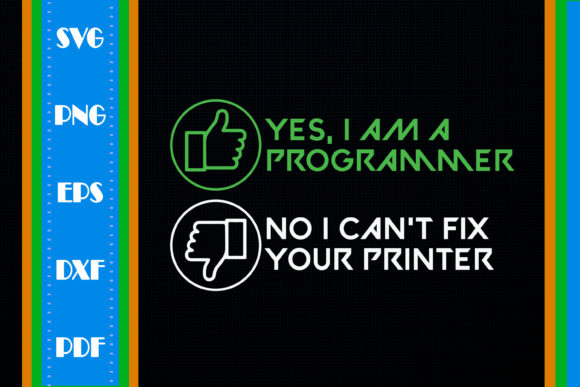
As someone who’s stitched hundreds of designs onto everything from baby onesies to boutique aprons, my first glance at I’m a Programmer, I Can’t Fix Your Printer told me exactly what kind of energy it brings: dry humor, confident minimalism, and zero visual clutter. It’s not ornate—it doesn’t need to be. The layout feels balanced, with clear letter spacing and a compact footprint that suggests it’ll sit neatly on a left-chest sweatshirt or the front pocket of a canvas tote. There’s no decorative border, no extra icons, no “tech” clichés like circuit lines or pixelated fonts. Just clean, legible type with personality—and that’s rare in print templates meant for embroidery conversion.
A Real-World Test: Embroidering It on a Linen Tea Towel
Last week, I prepped I’m a Programmer, I Can’t Fix Your Printer for a small-batch kitchen gift set—linen tea towels for a local dev-focused pop-up shop. I converted the included SVG into a machine embroidery design using my standard workflow, then ran a test on scrap linen with medium-weight cutaway stabilizer. The result? Crisp lettering, no thread nesting, and excellent readability at 3.5 inches wide. It held up beautifully on the slightly textured surface—no skipped stitches or distortion. Customers loved the subtle wit, and several asked if it came in a smaller version for napkin corners (a note I’ll pass along to my digitizer next time).
Where This Design Shines
- Custom apparel: Works especially well on midweight cotton blends—think crewneck sweatshirts, unisex tees, and structured caps. The letter height and spacing avoid the “crowded” look common in dense text-based embroidery files.
- Embroidered patches: Its clean edges and consistent stroke weight make it ideal for sew-on or iron-on patches. No satin stitch bleeding or fill stitch puffing—even at 2.75 inches tall.
- Baby embroidery: Gentle enough for onesies when sized down (test at 2 inches first), especially on soft piqué or interlock. Avoid stretchy knits unless you add light tear-away + topping.
- Holiday & gift embroidery: A quiet standout for tech-themed birthdays, graduation gifts, or “new job” presents. It reads as thoughtful—not gimmicky—especially on natural-fiber pillow covers or canvas market bags.
- Craft business & Etsy listings: As a digital embroidery file, it pairs cleanly with minimalist mockups. Buyers appreciate that it doesn’t require complex layering or color changes—just one solid stitch sequence.
Where to Proceed With Care
This isn’t a “set and forget” design for every surface. Its strength is also its limitation: it relies entirely on clarity of form. On dark fabric, contrast matters more than usual—stick with bright white, neon yellow, or charcoal grey thread, not pastels. On curved surfaces like baseball caps, keep it under 3 inches wide and center it carefully over the front panel; the straight baseline can warp slightly if hooped too aggressively.
Thin fabrics (like lightweight rayon or silk-blend scarves) need extra stabilization—lightweight cutaway plus a water-soluble topping prevents show-through and keeps letter edges sharp. And while the design avoids tiny serifs or fine connectors, don’t push it below 1.75 inches without testing: some lowercase “a” and “e” counters tighten up fast, and running stitch outlines may blur on low-density settings.
Design Assets That Earn Their Place
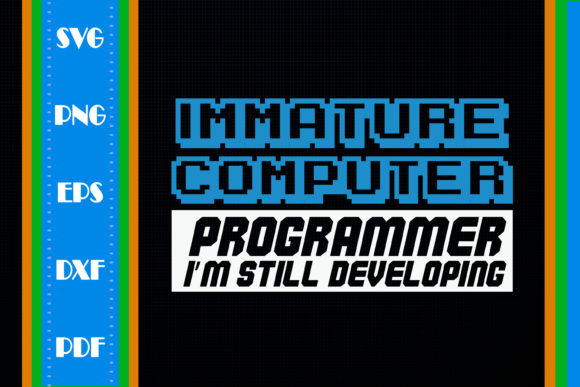
What makes I’m a Programmer, I Can’t Fix Your Printer stand out among Graphics and Print Templates isn’t just the joke—it’s how thoughtfully it translates across mediums. The included EPS and SVG files hold up perfectly when resized for printable mockups or digital product previews. The PNG gives you a quick visual reference for color blocking, and the DXF? Handy if you’re laser-cutting matching acrylic pins or wood veneer tags to bundle with embroidered items.
But remember: this is a starting point—not a finished embroidery project. Before adding it to your craft business inventory or listing it as part of an Etsy embroidery kit, verify licensing terms. Some sellers assume “digital download = commercial use,” but that’s not automatic. Check the seller’s policy before stitching it onto wholesale aprons or bundling it into a subscription box.
Practical Notes Every Embroidery Designer Should Keep Handy
- Always test I’m a Programmer, I Can’t Fix Your Printer on scrap fabric first—especially if you’re pairing it with a new stabilizer combo or thread brand.
- Review stitch density in your embroidery software. If it’s above 12,000 stitches, consider simplifying the fill or adjusting underlay—dense text can stiffen lightweight fabrics.
- Confirm hoop size compatibility. At full width (≈4 inches), it fits comfortably in a 5x7 hoop—but check your machine’s maximum stitch area before sending.
- Inspect small details at 200% zoom: are all letters fully connected? Does the apostrophe sit cleanly? Tiny flaws won’t show on screen but will snag thread mid-stitch.
- Test it in black-and-white mockups. If it loses impact without color, adjust letter weight or spacing before digitizing.
- Compare performance on light vs. dark fabric backgrounds—thread sheen and fabric texture change how legibility reads in person.
- Use proper stabilizer: medium cutaway for stable wovens, tear-away + topping for knits, and fusible + wash-away for delicate baby items.
- Double-check whether the design supports both personal and commercial embroidery projects—some bundles restrict resale of finished products.
Final Thought: It’s Not Just Funny—It’s Functional
In a sea of overdesigned, overly saturated embroidery files, I’m a Programmer, I Can’t Fix Your Printer earns respect by doing one thing exceptionally well: communicating with clarity, charm, and craft. It doesn’t try to be everything. It’s not an applique design, not a monogram system, not a seasonal bundle—it’s a precise, purpose-built piece of design language. For makers who value intention over ornamentation, it’s a quietly powerful addition to your embroidery project toolkit. Whether you’re stitching it onto a holiday gift for your coder cousin or branding a small shop’s signature tote bag, it lands with authenticity—and that’s something no stitch count can fake.